
The Centre for Security, Intelligence and Defence Studies
The Centre’s mandate is to enhance collaboration between NPSIA, the public and private sectors, civil society groups, the media, and the general public in order to foster informed debate and dialogue about Canadian security, intelligence, and defence.


Dr. Stephen Saideman
Director, CSIDS
Norman Paterson School of International Affairs
5108 Richcraft Building
1125 Colonel By Drive
Ottawa, Ontario K1S 5B6
Email: steve_saideman@carleton.ca
Our Network of Experts

We are proud to be Canada’s Top graduate program in international affairs. We are globally recognized for excellence in teaching, research, policy engagement, and public commentary.
For 60 years, we have trained our students to become leaders in the field of international affairs.
The Canadian Defence and Security Network is an independent, non-partisan international research group focused on themes of Military Personnel, Institutional Structures and Legal Frameworks of Civilian Control and Military Command; Society, Trust, and Evolving Politicization in Civil Military Relations; Democratic Erosion and the Security Sector in Comparative Perspective.
The network is funded by a SSHRC Partnership Grant

The Canadian Cybersecurity Centre of Excellence (3CE) is an independent, non-partisan international research group.
The network is funded by a SSHRC Partnership Grant
The Canadian Defence and Security Network is an independent, non-partisan research group of Canadian partners from government, academia and civil society. The network is funded by a SSHRC Partnership Grant and a MINDS Collaborative Network Grant and located in the Norman Paterson School of International Affairs at Carleton University.
Public Outreach
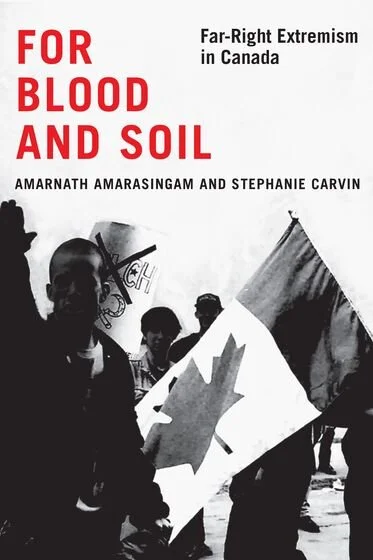
How Canada’s far right moved from the margins to the mainstream – and why it threatens our politics, culture, and safety.
By Amarnath Amarasingam and Stephanie Carvin
Canada is no stranger to hate. From Ku Klux Klan rallies in the 1920s and fascist sympathizers of the 1930s to the so-called Freedom Convoy’s occupation of Ottawa a century later, far-right extremism is a homegrown phenomenon, deeply woven into the nation’s political and cultural fabric.
Through firsthand interviews with former extremists, policymakers, and experts, alongside historical context, For Blood and Soil shows how hate movements – far from an imported problem – have evolved and rebranded, with extremist ideas moving seamlessly between virtual spaces and real-world violence. Over the past decade, online far-right activity in Canada has surged, connecting with networks of incels, QAnon followers, anti-government groups, and other conspiracy-driven communities. Public attention has often focused on religiously motivated violence, overlooking the threat from adherents to secular ideologies, even as violent attacks have risen. Moving beyond frameworks that focus on the United States and Europe, Amarnath Amarasingam and Stephanie Carvin offer targeted recommendations to address this serious threat to Canada’s institutions and social cohesion.
By tracing the experiences of individuals who have joined and left extremist groups, this accessible and authoritative work uncovers how extremist ideologies are financed and facilitated and how personal and political forces sustain hate across generations.
Unwritten Ultimate Responsibility: The Prime Minister and Canadian National Security (May 21, 2026).
By Philippe Lagasse, Ian Brodie and Vincent Rigby
Canada's Prime Minister is ultimately responsible for national security, yet powers they exercise in this domain are largely unwritten. While statute and regulations provide ministers, departments, and agencies with most of their national security authorities and functions, the Prime Minister's national security functions and powers mostly stem from an interplay of constitutional convention, Crown prerogative, and their capacity as the head of government. This article examines how each of these sources of authority shape the Prime Minister's national security roles and powers. The article then explores the Prime Minister's national security responsibilities and functions work in particular instances. These instances include how Cabinet committees and the PCO have been organized to support the Prime Minister's national security responsibilities, how the Prime Minister is granted access to classified information, the still evolving roles of the Prime Minister's national security and foreign policy advisors, the Prime Minister's involvement in national security diplomacy and military deployments, and the setting of national security budgets. The article concludes with a brief discussion of the limitations of studying the powers of the Prime Minister and national security in Canada.
Intelligence and National Security: “To spy, or not to spy: Canadian government consideration of a foreign intelligence agency, 1945–2007”
By Alan Barnes
Unlike most of its key allies, the Canadian government has not created a foreign intelligence agency to spy abroad using human sources. Newly-available archival records for the first time furnish insights into the deliberations of Canadian officials and ministers on this question. Since the early 1950s, several proposals for a foreign intelligence agency have been prepared by Canadian officials, but in all cases they failed to receive government approval. By providing an understanding of how this issue has been viewed from inside government over the past eight decades, these records will inform the ongoing public debate over the pros and cons of creating a Canadian foreign intelligence agency.
CSIDS Mandate

Research
Supporting and encouraging interdisciplinary research at Carleton in salient issues in security, intelligence and defence

Mentoring
Supporting the graduate education and training of students at the Master’s and Doctoral levels.

Hosting
Hosting visiting scholars and research fellows pursuing research

Organizing
Organizing and hosting conferences, seminars, symposia, workshops, and guest lectures on topics relating to security, intelligence, and defence